
로고

「1992 노동조합 및 노동관계법」 (제1조-제24ZH조)

ㆍ 국 가 ‧ 지 역: 영국 ㆍ 법 률 번 호: 1992법률제52호 ㆍ 제 정 일: 1992년 7월 16일 ㆍ 개 정 일: 2020년 6월 02일

Part I Trade Unions

Chapter I Introductory

Meaningof“tradeunion"

1Meaningof“tradeunion".

InthisActa“tradeunion” meansanorganisation(whether temporary or permanent)—

(a) which consists wholly or mainly of workers of one or more descriptions and whose principal purposes include the regulation of relations between workers of that description or those descriptions and employers or employers’ associations; or (b) which consists wholly or mainly of— (i) constituent or affiliated organisations which fulfil the conditions in paragraph (a) (or themselves consist wholly or mainly of constituent or affiliated organisations which fulfil those conditions), or (ii) representatives of such constituent or affiliated organisations, and whose principal purposes include the regulation of relations between workers and employers or between workers and employers’ associations, or the regulation of relations between its constituent or affiliated organisations.

The list of trade unions

2 The list of trade unions.

(1) The Certification Officer shall keep a list of trade unions containing the names of—

(a) the organisations whose names were, immediately before the commencement of this Act, duly entered in the list of trade unions kept by him under section 8 of theTrade Union and Labour Relations Act1974 , and (b) the names of the organisations entitled to have their names entered in the list in accordance with this Part.

(2) The Certification Officer shall keep copies of the list of trade unions, as for the time being in force, available for public inspection at all reasonable hours free of charge.

(3) A copy of the list shall be included in his annual report.

(4) The fact that the name of an organisation is included in the list of trade unions is evidence (in Scotland, sufficient evidence) that the organisation is a trade union.

(5) On the application of an organisation whose name is included in the list, the Certification Officer shall issue it with a certificate to that effect.

(6) A document purporting to be such a certificate is evidence (in Scotland, sufficient evidence) that the name of the organisation is entered in the list.

3 Application to have name entered in the list.

(1) An organisation of workers, whenever formed, whose name is not entered in the list of trade unions may apply to the Certification Officer to have its name entered in the list.

(2) The application shall be made in such form and manner as the Certification Officer may require and shall be accompanied by—

(a)a copy of the rules of the organisation, (b)a list of its officers, (c)the address of its head or main office, and (d)the name under which it is or is to be known, and by the prescribed fee.

(3) If the Certification Officer is satisfied—

(a)that the organisation is a trade union, (b)that subsection (2) has been complied with, and (c)that entry of the name in the list is not prohibited by subsection (4), he shall enter the name of the organisation in the list of trade unions.

(4) The Certification Officer shall not enter the name of an organisation in the list of trade unions if the name is the same as that under which another organisation—

(a) was on 30th September 1971 registered as a trade union under the Trade Union Acts 1871 to 1964, (b) was at any time registered as a trade union or employers’ association under the Industrial Relations Act 1971, or (c) is for the time being entered in the list of trade unions or in the list of employers’ associations kept under Part II of this Act, or if the name is one so nearly resembling any such name as to be likely to deceive the public.

4 Removal of name from the list.

(1) If it appears to the Certification Officer, on application made to him or otherwise, that an organisation whose name is entered in the list of trade unions is not a trade union, he may remove its name from the list.

(2) He shall not do so without giving the organisation notice of his intention and considering any representations made to him by the organisation within such period (of not less than 28 days beginning with the date of the notice) as may be specified in the notice.

(3) The Certification Officer shall remove the name of an organisation from the list of trade unions if—

(a) he is requested by the organisation to do so, or (b) he is satisfied that the organisation has ceased to exist.

Certificationasindependenttrade union

5 Meaning of “independent trade union".

In this Act an “independent trade union” means a trade union which—

(a) is not under the domination or control of an employer or group of employers or of one or more employers’ associations, and (b) is not liable to interference by an employer or any such group or association (arising out of the provision of financial or material support or by any other means whatsoever) tending towards such control; and references to “independence”, in relation to a trade union, shall be construed accordingly.

6 Application for certificate of independence.

(1) A trade union whose name is entered on the list of trade unions may apply to the Certification Officer for a certificate that it is independent. The application shall be made in such form and manner as the Certification Officer may require and shall be accompanied by the prescribed fee.

(2) The Certification Officer shall maintain a record showing details of all applications made to him under this section and shall keep it available for public inspection (free of charge) at all reasonable hours.

(3) If an application is made by a trade union whose name is not entered on the list of trade unions, the Certification Officer shall refuse a certificate of independence and shall enter that refusal on the record.

(4) In any other case, he shall not come to a decision on the application before the end of the period of one month after it has been entered on the record; and before coming to his decision he shall make such enquiries as he thinks fit and shall take into account any relevant information submitted to him by any person.

(5) He shall then decide whether the applicant trade union is independent and shall enter his decision and the date of his decision on the record.

(6) If he decides that the trade union is independent he shall issue a certificate accordingly; and if he decides that it is not, he shall give reasons for his decision.

7 Withdrawal or cancellation of certificate.

(1) The Certification Officer may withdraw a trade union’s certificate of independence if he is of the opinion that the union is no longer independent.

(2) Where he proposes to do so he shall notify the trade union and enter notice of the proposal in the record.

(3) He shall not come to a decision on the proposal before the end of the period of one month after notice of it was entered on the record; and before coming to his decision he shall make such enquiries as he thinks fit and shall take into account any relevant information submitted to him by any person.

(4) He shall then decide whether the trade union is independent and shall enter his decision and the date of his decision on the record.

(5) He shall confirm or withdraw the certificate accordingly; and if he decides to withdraw it, he shall give reasons for his decision.

(6) Where the name of an organisation is removed from the list of trade unions, the Certification Officer shall cancel any certificate of independence in force in respect of that organisation by entering on the record the fact that the organisation’s name has been removed from that list and that the certificate is accordingly cancelled.

8 Conclusive effect of Certification Officer’s decision.

(1) A certificate of independence which is in force is conclusive evidence for all purposes that a trade union is independent; and a refusal, withdrawal or cancellation of a certificate of independence, entered on the record, is conclusive evidence for all purposes that a trade union is not independent.

(2) A document purporting to be a certificate of independence and to be signed by the Certification Officer, or by a person authorised to act on his behalf, shall be taken to be such a certificate unless the contrary is proved.

(3) A document purporting to be a certified copy of an entry on the record and to be signed by the Certification Officer, or by a person authorised to act on his behalf, shall be taken to be a true copy of such an entry unless the contrary is proved.

(4) If in any proceedings before a court, the Employment Appeal Tribunal, the Central Arbitration Committee, ACAS or an employment tribunal a question arises whether a trade union is independent and there is no certificate of independence in force and no refusal, withdrawal or cancellation of a certificate recorded in relation to that trade union—

(a) that question shall not be decided in those proceedings, and (b) the proceedings shall instead be stayed or sisted until a certificate of independence has been issued or refused by the Certification Officer.

(5) The body before whom the proceedings are stayed or sisted may refer the question of the independence of the trade union to the Certificate Officer who shall proceed in accordance with section 6 as on an application by that trade union.

Supplementary

9 Appeal against decision of Certification Officer.

(1) An organisation aggrieved by the refusal of the Certification Officer to enter its name in the list of trade unions, or by a decision of his to remove its name from the list, may appeal to the Employment Appeal Tribunal on any appealable question.

(2) A trade union aggrieved by the refusal of the Certification Officer to issue it with a certificate of independence, or by a decision of his to withdraw its certificate, may appeal to the Employment Appeal Tribunal on any appealable question.

(3) . . . . . . . .

(3) . . . . . . . .

(4) For the purposes of this section, an appealable question is any question of law arising in the proceedings before, or arising from the decision of, the Certification Officer.

Chapter II Status and property of trade unions

General

10 Quasi-corporate status of trade unions.

(1) A trade union is not a body corporate but—

(a) it is capable of making contracts; (b) it is capable of suing and being sued in its own name, whether in proceedings relating to property or founded on contract or tort or any other cause of action; and (c) proceedings for an offence alleged to have been committed by it or on its behalf may be brought against it in its own name.

(2) A trade union shall not be treated as if it were a body corporate except to the extent authorised by the provisions of this Part.

(3) A trade union shall not be registered—

(a) as a company under the the Companies Act 2006, or (b) under the Friendly Societies Act 1974 or the the Co-operative and Community Benefit Societies Act 2014; and any such registration of a trade union (whenever effected) is void.

11 Exclusion of common law rules as to restraint of trade.

(1) The purposes of a trade union are not, by reason only that they are in restraint of trade, unlawful so as—

(a) to make any member of the trade union liable to criminal proceedings for conspiracy or otherwise, or (b) to make any agreement or trust void or voidable.

(2) No rule of a trade union is unlawful or unenforceable by reason only that it is in restraint of trade.

Propertyoftradeunion

12 Property to be vested in trustees.

(1) All property belonging to a trade union shall be vested in trustees in trust for it.

(2) A judgment, order or award made in proceedings of any description brought against a trade union is enforceable, by way of execution, diligence, punishment for contempt or otherwise, against any property held in trust for it to the same extent and in the same manner as if it were a body corporate.

(3) Subsection (2) has effect subject to section 23 (restriction on enforcement of awards against certain property).

13 Vesting of property in new trustees.

(1) The provisions of this section apply in relation to the appointment or discharge of trustees in whom any property is vested in trust for a trade union whose name is entered in the list of trade unions.

(2) In the following sections as they apply to such trustees references to a deed shall be construed as references to an instrument in writing—

(a) section 39 of the Trustee Act 1925 and section 38 of the Trustee Act (Northern Ireland) 1958 (retirement of trustee without a new appointment), and (b) section 40 of the Trustee Act 1925 and section 39 of the Trustee Act (Northern Ireland) 1958 (vesting of trust property in new or continuing trustees).

(3) Where such a trustee is appointed or discharged by a resolution taken by or on behalf of the union, the written record of the resolution shall be treated for the purposes of those sections as an instrument in writing appointing or discharging the trustee.

(4) In section 40 of the Trustee Act 1925 and section 39 of the Trustee Act (Northern Ireland) 1958 as they apply to such trustees, paragraphs (a) and (c) of subsection (4) (which exclude certain property from the section) shall be omitted.

14 Transfer of securities held in trust for trade union.

(1) In this section—

“instrument of appointment” means an instrument in writing appointing a new trustee of a trade union whose name is entered in the list of trade unions, and “instrument of discharge” means an instrument in writing discharging a trustee of such a trade union; and for the purposes of this section where a trustee is appointed or discharged by a resolution taken by or on behalf of such a trade union, the written record of the resolution shall be treated as an instrument in writing appointing or discharging the trustee.

(2) Where by any enactment or instrument the transfer of securities of any description is required to be effected or recorded by means of entries in a register, then if—

(a) there is produced to the person authorised or required to keep the register a copy of an instrument of appointment or discharge which contains or has attached to it a list identifying the securities of that description held in trust for the union at the date of the appointment or discharge, and (b) it appears to that person that any of the securities so identified are included in the register kept by him,he shall make such entries as may be necessary to give effect to the instrument of appointment or discharge. This subsection has effect notwithstanding anything in any enactment or instrument regulating the keeping of the register.

(3) A document which purports to be a copy of an instrument of appointment or discharge containing or having attached to it such a list, and to be certified in accordance with the following subsection to be a copy of such an instrument, shall be taken to be a copy of such an instrument unless the contrary is proved.

(4) The certificate shall be given by the president and general secretary of the union and, in the case of an instrument to which a list of securities is attached, shall appear both on the instrument and on the list.

(5) Nothing done for the purposes of or in pursuance of this section shall be taken to affect any person with notice of any trust or to impose on any person a duty to inquire into any matter.

(6) In relation to a Scottish trust, references in this section to the appointment and discharge of a trustee shall be construed as including references to, respectively, the assumption and resignation of a trustee; and references to an instrument appointing or discharging a trustee shall be construed accordingly.

15 Prohibition on use of funds to indemnify unlawful conduct.

(1) It is unlawful for property of a trade union to be applied in or towards—

(a) the payment for an individual of a penalty which has been or may be imposed on him for an offence or for contempt of court, (b) the securing of any such payment, or (c) the provision of anything for indemnifying an individual in respect of such a penalty.

(2) Where any property of a trade union is so applied for the benefit of an individual on whom a penalty has been or may be imposed, then—

(a) in the case of a payment, an amount equal to the payment is recoverable by the union from him, and (b) in any other case, he is liable to account to the union for the value of the property applied.

(3) If a trade union fails to bring or continue proceedings which it is entitled by bring by virtue of subsection (2), a member of the union who claims that the failure is unreasonable may apply to the court on that ground for an order authorising him to bring or continue the proceedings on the union’s behalf and at the union’s expense.

(4) In this section “penalty”, in relation to an offence, includes an order to pay compensation and an order for the forfeiture of any property; and references to the imposition of a penalty for an offence shall be construed accordingly.

(5) The Secretary of State may by order designate offences in relation to which the provisions of this section do not apply.

Any such order shall be made by statutory instrument which shall be subject to annulment in pursuance of a resolution of either House of Parliament.

(6) This section does not affect—

(a) any other enactment, any rule of law or any provision of the rules of a trade union which makes it unlawful for the property of a trade union to be applied in a particular way; or (b) any other remedy available to a trade union, the trustees of its property or any of its members in respect of an unlawful application of the union’s property.

(7) In this section “member”, in relation to a trade union consisting wholly or partly of, or of representatives of, constituent or affiliated organisations, includes a member of any of the constituent or affiliated organisations.

16 Remedy against trustees for unlawful use of union property.

(1) A member of a trade union who claims that the trustees of the union’s property—

(a) have so carried out their functions, or are proposing so to carry out their functions, as to cause or permit an unlawful application of the union’s property, or (b) have complied, or are proposing to comply, with an unlawful direction which has been or may be given, or purportedly given, to them under the rules of the union, may apply to the court for an order under this section.

(2) In a case relating to property which has already been unlawfully applied, or to an unlawful direction that has already been complied with, an application under this section may be made only by a person who was a member of the union at the time when the property was applied or, as the case may be, the direction complied with.

(3) Where the court is satisfied that the claim is well-founded, it shall make such order as it considers appropriate.

The court may in particular— (a) require the trustees (if necessary, on behalf of the union) to take all such steps as may be specified in the order for protecting or recovering the property of the union; (b) appoint a receiver of, or in Scotland a judicial factor on, the property of the union; (c) remove one or more of the trustees.

(4) Where the court makes an order under this section in a case in which—

(a) property of the union has been applied in contravention of an order of any court, or in compliance with a direction given in contravention of such an order, or (b) the trustees were proposing to apply property in contravention of such an order or to comply with any such direction, the court shall by its order remove all the trustees except any trustee who satisfies the court that there is a good reason for allowing him to remain a trustee.

(5) Without prejudice to any other power of the court, the court may on an application for an order under this section grant such interlocutory relief (in Scotland, such interim order) as it considers appropriate.

(6) This section does not affect any other remedy available in respect of a breach of trust by the trustees of a trade union’s property.

(7) In this section “member”, in relation to a trade union consisting wholly or partly of, or of representatives of, constituent or affiliated organisations, includes a member of any of the constituent or affiliated organisations.

17 Nominations by members of trade unions.

(1) The Secretary of State may make provision by regulations for enabling members of trade unions who are not under 16 years of age to nominate a person or persons to become entitled, on the death of the person making the nomination, to the whole or part of any money payable on his death out of the funds of the trade union.

(2) The regulations may include provision as to the manner in which nominations may be made and as to the manner in which nominations may be varied or revoked.

(3) The regulations may provide that, subject to such exceptions as may be prescribed, no nomination made by a member of a trade union shall be valid if at the date of the nomination the person nominated is an officer or employee of the trade union or is otherwise connected with the trade union in such manner as may be prescribed by the regulations.

(4) The regulations may include such incidental, transitional or supplementary provisions as the Secretary of State may consider appropriate.

(5) They may, in particular, include provision for securing, to such extent and subject to such conditions as may be prescribed in the regulations, that nominations made under the Trade Union Act 1871 Amendment Act 1876 have effect as if made under the regulations and may be varied or revoked accordingly.

(6) Regulations under this section shall be made by statutory instrument which shall be subject to annulment in pursuance of a resolution of either House of Parliament.

18 Payments out of union funds on death of member.

(1) The Secretary of State may make provision by regulations for enabling money payable out of the funds of a trade union on the death of a member, to an amount not exceeding £5,000, to be paid or distributed on his death without letters of administration, probate of any will or confirmation.

(2) The regulations may include such incidental, transitional and supplementary provisions as the Secretary of State may consider appropriate.

(3) Regulations under this section shall be made by statutory instrument which shall be subject to annulment in pursuance of a resolution of either House of Parliament.

(4) The Treasury may by order under section 6(1) of the Administration of Estates (Small Payments) Act 1965 direct that subsection (1) above shall have effect with the substitution for the reference to £5,000 of a reference to such higher amount as may be specified in the order.

19 Application of certain provisions relating to industrial assurance or friendly societies.

(1) Section 99 of the Friendly Societies Act 1992 (insurance of lives of children under 10) applies to a trade union as to a friendly society.

(2) . . . . . . . . . .

(2) . . . . . . . . . .

(3) Section 52 of the Friendly Societies Act 1974 (charitable subscriptions and contributions to other registered societies) extends to a trade union, or branch of a trade union, as regards contributing to the funds and taking part in the government of a medical society, that is, a society for the purpose of relief in sickness by providing medical attendance and medicine.

A trade union, or branch of a trade union, shall not withdraw from contributing to the funds of such a society except on three months notice to the society and on payment of all contributions accrued or accruing due to the date of the expiry of the notice.

(4) . . . . . . . . . . . .

(4) . . . . . . . . . . . .

Liabilityoftradeunionsin proceedingsintort

20 Liability of trade union in certain proceedings in tort.

(1) Where proceedings in tort are brought against a trade union—

(a) on the ground that an act— (i) induces another person to break a contract or interferes or induces another person to interfere with its performance, or (ii) consists in threatening that a contract (whether one to which the union is a party or not) will be broken or its performance interfered with, or that the union will induce another person to break a contract or interfere with its performance, or (b) in respect of an agreement or combination by two or more persons to do or to procure the doing of an act which, if it were done without any such agreement or combination,would be actionable in tort on such a ground, then, for the purpose of determining in those proceedings whether the union is liable in respect of the act in question, that act shall be taken to have been done by the union if, but only if, it is to be taken to have been authorised or endorsed by the trade union in accordance with the following provisions.

(2) An act shall be taken to have been authorised or endorsed by a trade union if it was done, or was authorised or endorsed—

(a) by any person empowered by the rules to do, authorise or endorse acts of the kind in question, or (b) by the principal executive committee or the president or general secretary, or (c) by any other committee of the union or any other official of the union (whether employed by it or not).

(3) For the purposes of paragraph (c) of subsection (2)—

(a) any group of persons constituted in accordance with the rules of the union is a committee of the union; and (b) an act shall be taken to have been done, authorised or endorsed by an official if it was done, authorised or endorsed by, or by any member of, any group of persons of which he was at the material time a member, the purposes of which included organising or co-ordinating industrial action.

(4) The provisions of paragraphs (b) and (c) of subsection (2) apply notwithstanding anything in the rules of the union, or in any contract or rule of law, but subject to the provisions of section 21 (repudiation by union of certain acts).

(5) Where for the purposes of any proceedings an act is by virtue of this section taken to have been done by a trade union, nothing in this section shall affect the liability of any other person, in those or any other proceedings, in respect of that act.

(6) In proceedings arising out of an act which is by virtue of this section taken to have been done by a trade union, the power of the court to grant an injunction or interdict includes power to require the union to take such steps as the court considers appropriate for ensuring—

(a) that there is no, or no further, inducement of persons to take part or to continue to take part in industrial action, and (b) that no person engages in any conduct after the granting of the injunction or interdict by virtue of having been induced before it was granted to take part or to continue to take part in industrial action. The provisions of subsections (2) to (4) above apply in relation to proceedings for failure to comply with any such injunction or interdict as they apply in relation to the original proceedings.

(7) In this section “rules”, in relation to a trade union, means the written rules of the union and any other written provision forming part of the contract between a member and the other members.

21 Repudiation by union of certain acts.

(1) An act shall not be taken to have been authorised or endorsed by a trade union by virtue only of paragraph (c) of section 20(2) if it was repudiated by the executive, president or general secretary as soon as reasonably practicable after coming to the knowledge of any of them.

(2) Where an act is repudiated—

(a) written notice of the repudiation must be given to the committee or official in question, without delay, and (b) the union must do its best to give individual written notice of the fact and date of repudiation, without delay— (i) to every member of the union who the union has reason to believe is taking part, or might otherwise take part, in industrial action as a result of the act, and (ii) to the employer of every such member.

(3) The notice given to members in accordance with paragraph (b)(i) of subsection (2) must contain the following statement—

“ Your union has repudiated the call (or calls) for industrial action to which this notice relates and will give no support to unofficial industrial action taken in response to it (or them). If you are dismissed while taking unofficial industrial action, you will have no right to complain of unfair dismissal. ”

(4) If subsection (2) or (3) is not complied with, the repudiation shall be treated as ineffective.

(5) An act shall not be treated as repudiated if at any time after the union concerned purported to repudiate it the executive, president or general secretary has behaved in a manner which is inconsistent with the purported repudiation.

(6) The executive, president or general secretary shall be treated as so behaving if, on a request made to any of them within three months of the purported repudiation by a person who—

(a) is a party to a commercial contract whose performance has been or may be interfered with as a result of the act in question, and (b) has not been given written notice by the union of the repudiation, it is not forthwith confirmed in writing that the act has been repudiated.

(7) In this section “commercial contract” mean means any contract other than—

(a) a contract of employment, or (b) any other contract under which a person agrees personally to do work or perform services for another.

22 Limit on damages awarded against trade unions in actions in tort.

(1) This section applies to any proceedings in tort brought against a trade union, except—

(a) proceedings for personal injury as a result of negligence, nuisance or breach of duty; (b) proceedings for breach of duty in connection with the ownership, occupation, possession, control or use of property; (c) proceedings brought by virtue of Part I of the Consumer Protection Act 1987 (product liability).

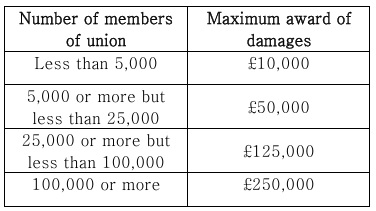
(2) In any proceedings in tort to which this section applies the amount which may awarded against the union by way of damages shall not exceed the following limit—

(3) The Secretary of State may by order amend subsection (2) so as to vary any of the sums specified; and the order may make such transitional provision as the Secretary of State considers appropriate.

(4) Any such order shall be made by statutory instrument which shall be subject to annulment in pursuance of a resolution of either House of Parliament.

(5) In this section—

“breach of duty” means breach of a duty imposed by any rule of law or by or under any enactment; “personal injury” includes any disease and any impairment of a person’s physical or mental condition; and “property” means any property, whether real or personal (or in Scotland, heritable or moveable).

Restrictiononenforcement againstcertainproperty

23 Restriction on enforcement of awards against certain property.

(1) Where in any proceedings an amount is awarded by way of damages, costs or expenses—

(a) against a trade union, (b) against trustees in whom property is vested in trust for a trade union, in their capacity as such (and otherwise than in respect of a breach of trust on their part), or (c) against members or officials of a trade union on behalf of themselves and all of the members of the union, no part of that amount is recoverable by enforcement against any protected property.

(2) The following is protected property—

(a) property belonging to the trustees otherwise than in their capacity as such; (b) property belonging to any member of the union otherwise than jointly or in common with the other members; (c) property belonging to an official of the union who is neither a member nor a trustee; (d) property comprised in the union’s political fund where that fund— (i) is subject to rules of the union which prevent property which is or has been comprised in the fund from being used for financing strikes or other industrial action, and (ii) was so subject at the time when the act in respect of which the proceedings are brought was done; (e) property comprised in a separate fund maintained in accordance with the rules of the union for the purpose only of providing provident benefits.

(3) For this purpose “provident benefits” includes—

(a) any payment expressly authorised by the rules of the union which is made— (i)to a member during sickness or incapacity from personal injury or while out of work, or (ii)to an aged member by way of superannuation, or (iii)to a member who has met with an accident or has lost his tools by fire or theft; (b) a payment in discharge or aid of funeral expenses on the death of a member or the spouse or civil partner of a member or as provision for the children of a deceased member.

CHAPTER III TRADE UNION ADMINISTRATION

Registerofmembers’namesand addresses

24 Duty to maintain register of members’ names and addresses.

(1) A trade union shall compile and maintain a register of the names and addresses of its members, and shall secure, so far as is reasonably practicable, that the entries in the register are accurate and are kept up- to-date.

(2) The register may be kept by means of a computer.

(3) A trade union shall—

(a) allow any member, upon reasonable notice, to ascertain from the register, free of charge and at any reasonable time, whether there is an entry on it relating to him; and (b) if requested to do so by any member, supply him as soon as reasonably practicable, either free of charge or on payment of a reasonable fee, with a copy of any entry on the register relating to him.

(4) . . . . . .

(4) . . . . . .

(5) For the purposes of this section a member’s address means either his home address or another address which he has requested the union in writing to treat as his postal address.

(6) The remedy for failure to comply with the requirements of this section is by way of application under section 25 (to the Certification Officer) or section 26 (to the court); see also the powers of the Certification Officer under section 24B to make a declaration and an enforcement order.

24ZA Duty to provide membership audit certificate

(1) A trade union required to maintain a register of the names and addresses of its members by section 24 must send to the Certification Officer a membership audit certificate in relation to each reporting period.

(2) In this section and in sections 24ZB to 24ZF, a “reporting period” means a period in relation to which the union is required by section 32 to send an annual return to the Certification Officer.

(3) The union must send the membership audit certificate in relation to a reporting period to the Certification Officer at the same time as it sends to the Officer its annual return under section 32 in relation to that period.

(4) In the case of a trade union required by section 24ZB to appoint an assurer in relation to a reporting period, the “membership audit certificate” in relation to that period is the certificate which the assurer is required to provide to the union in relation to that period pursuant to that appointment.

(5) In any other case, the “membership audit certificate” in relation to a reporting period is a certificate which—

(a) must be signed by an officer of the trade union who is authorised to sign on its behalf, (b) must state the officer's name, and (c) must state whether, to the best of the officer's knowledge and belief, the union has complied with its duties under section 24(1) throughout the reporting period.

(6) A trade union must, at a person's request, supply the person with a copy of its most recent membership audit certificate either free of charge or on payment of a reasonable charge.

(7) The Certification Officer must at all reasonable hours keep available for public inspection, either free of charge or on payment of a reasonable charge, copies of all membership audit certificates sent to the Officer under this section.

24ZB Duty to appoint an assurer

(1) A trade union required to maintain a register of the names and addresses of its members by section 24 must, in relation to each reporting period, appoint a qualified independent person to be an assurer in relation to that period.

(2) There is incorporated in the assurer's appointment a duty which the assurer owes to the trade union—

(a) to provide to the union a membership audit certificate in relation to the reporting period which accords with the requirements of section 24ZD, and (b) to carry out such enquiries as the assurer considers necessary to enable the assurer to provide that certificate.

(3) A person is a “qualified independent person” if—

(a) the person either satisfies such conditions as may be specified for the purposes of this section by order of the Secretary of State or is specified by name in such an order, and (b) the trade union has no grounds for believing that— (i) the person will carry out an assurer's functions otherwise than competently, or (ii) the person's independence in relation to the union might reasonably be called into question.

(4) None of the following may act as an assurer—

(a) an officer or employee of the trade union or of any of its branches or sections; (b) a person who is a partner of, or in the employment of, or who employs, such an officer or employee.

(5) This section does not apply to a trade union in relation to a reporting period if the number of its members at the end of the preceding reporting period did not exceed 10,000.

(6) Any order under this section is to be made by statutory instrument and is to be subject to annulment in pursuance of a resolution of either House of Parliament.

24ZC Appointment and removal of an assurer

(1) The rules of every trade union to which section 24ZB applies must contain provision for the appointment and removal of an assurer.

But the following provisions have effect notwithstanding anything in the rules.

(2) An assurer must not be removed from office except by resolution passed at a general meeting of the members of the union or of delegates of its members.

(3) A person duly appointed as an assurer in relation to a reporting period must be reappointed as assurer in relation to the following reporting period, unless—

(a) a resolution has been passed at a general meeting of the trade union appointing somebody else instead or providing expressly that the person is not to be re- appointed, (b) the person has given notice to the union in writing of the person's unwillingness to be reappointed, (c) the person is not qualified for the appointment in accordance with section 24ZB, or (d) the person has ceased to act as assurer by reason of incapacity.

(4) But a person need not automatically be reappointed where—

(a) the person is retiring, (b) notice has been given of an intended resolution to appoint somebody else instead, and (c) that resolution cannot be proceeded with at the meeting because of the death or incapacity of the proposed replacement.

24ZD Requirements of assurer's membership audit certificate

(1) For the purposes of section 24ZB(2)(a) the requirements of a membership audit certificate in relation to a reporting period provided by an assurer are as follows.

(2) The certificate must state the name of, and be signed by, the assurer.

(3) The certificate must state—

(a) whether, in the assurer's opinion, the trade union's system for compiling and maintaining the register of the names and addresses of its members was satisfactory for the purposes of complying with the union's duties under section 24(1) throughout the reporting period, and (b) whether, in the assurer's opinion, the assurer has obtained the information and explanations which the assurer considers necessary for the performance of the assurer's functions.

(4) If the certificate states that—

(a) in the assurer's opinion, the trade union's system for compiling and maintaining the register was not satisfactory for the purposes of complying with the union's duties under section 24(1) throughout the reporting period, or (b) in the assurer's opinion, the assurer has failed to obtain the information and explanations which the assurer considers necessary for the performance of the assurer's functions, the certificate must state the assurer's reasons for making that statement.

(5) In the case of a failure to obtain information or explanations as described in subsection (4)(b), the certificate must also—

(a) provide a description of the information or explanations requested or required which have not been obtained, and (b) state whether the assurer required that information or those explanations from the union's officers, or officers of any of its branches or sections, under section 24ZE.

(6) The reference in subsection (2) to signature by the assurer is, where that office is held by a body corporate or partnership, to signature in the name of the body corporate or partnership by an individual authorised to sign on its behalf.

24ZE Rights of assurer

(1) An assurer appointed by a trade union under section 24ZB—

(a) has a right of access at all reasonable times to the register of the names and addresses of the union's members and to all other documents which the assurer considers may be relevant to whether the union has complied with any of the requirements of section 24(1), and (b) is entitled to require from the union's officers, or the officers of any of its branches or sections, such information and explanations as the assurer considers necessary for the performance of the assurer's functions.

(2) In subsection (1) references to documents include information recorded in any form.

24ZF Duty to inform the Certification Officer

If an assurer provides a membership audit certificate in relation to a reporting period to a trade union which states that, in the assurer's opinion—

(a) the union's system for compiling and maintaining the register was not satisfactory for the purposes of complying with the union's duties under section 24(1) throughout that period, or (b) the assurer has failed to obtain the information and explanations which the assurer considers necessary for the performance of the assurer's functions, the assurer must send a copy of the certificate to the Certification Officer as soon as is reasonably practicable after it is provided to the union.

24ZG Duty of confidentiality

(1) The duty of confidentiality as respects the register is incorporated in an assurer's appointment by a trade union under section 24ZB.

(2) The duty of confidentiality as respects the register is a duty which the assurer owes to the union—

(a) not to disclose any name or address in the register of the names and addresses of the union's members except in permitted circumstances, and (b) to take all reasonable steps to secure that there is no disclosure of any such name or address by another person except in permitted circumstances.

(3) The circumstances in which disclosure of a member's name or address is permitted are—

(a) where the member consents, (b) where it is required or requested by the Certification Officer for the purposes of the discharge of any of the Officer's functions, (c) where it is required for the purposes of the discharge of any of the functions of an inspector appointed by the Officer, (d) where it is required for the purposes of the discharge of any of the functions of the assurer, or (e) where it is required for the purposes of the investigation of crime or criminal proceedings.

24ZH Power of Certification Officer to require production of documents etc

(1) If the Certification Officer thinks there is good reason to do so, the Officer—

(a) may give directions to a trade union, or a branch or section of a trade union, requiring it to produce such relevant documents as are specified in the directions; (b) may authorise a member of the Officer's staff or any other person (“an authorised person”), on producing (if so required) evidence of that authority, to require a trade union, or a branch or section of a trade union, to produce immediately to the authorised person such relevant documents as that person specifies.

(2) “Relevant documents”, in relation to a trade union or a branch or section of a trade union, means—

(a) the register of the names and addresses of the trade union's members, and (b) documents of any other description which the Certification Officer or authorised person considers may be relevant to whether the union has failed to comply with any of the requirements of section 24(1) (duties regarding the register of members).

(3) Directions under subsection (1)(a) must specify the time and place at which the documents are to be produced.

(4) Where the Certification Officer, or an authorised person, has power to require the production of documents by virtue of subsection (1), the Officer or authorised person has the like power to require production of those documents from any person who appears to the Officer or authorised person to be in possession of them.

(5) The power under this section to require the production of documents includes the power—

(a) if the documents are produced— (i) to take copies of them or extracts from them; (ii) to require the person by whom they are produced to provide an explanation of any of them; (iii) to require any person who is or has been an official or agent of the trade union to provide an explanation of any of them; (b) if the documents are not produced, to require the person who was required to produce them to state, to the best of the person's knowledge and belief, where they are.

(6) For the purposes of subsection (5)(a)(iii), “agent” includes an assurer appointed by the trade union under section 24ZB.

(7) For supplementary provision, see section 24ZK.

「1992 노동조합 및 노동관계법」 (제1조-제24ZH조)

ㆍ 국 가 ‧ 지 역: 영국 ㆍ 법 률 번 호: 1992법률제52호 ㆍ 제 정 일: 1992년 7월 16일 ㆍ 개 정 일: 2020년 6월 02일

제1편 노동조합

제1장 도입

“노동조합”의의의

제1조“노동조합”의의의

이 법에서 “노동조합”이라 함은다음 각 호의 (임시 또는 영구) 조직을 말한다.

(a) 조직의 전체 또는 일부가 근로자로 구성되고, 근로자와 사용자 및 사용자단체 간의 관계 의 규제를 주목적으로 하는 경우 b) 조직의 전체 또는 일부가 다음 각 목의 어느 하나로 구성되고, 근로자와 사용자간 또 는 근로자와 사용자단체 간의 관계의 규제 또는 그 구성조직또는 가맹조직들간의 관계의 규제를 주목적으로 하는 경우 (i) 조직이 제(a)호의 요건을 충족한 구성조직 또는 가맹조직(또는 그 자체가 해당조건을 충족하는 구성조직 또는 가맹조직의 전체 또는 주로 구성) (ii) 해당 구성조직 또는 가맹 조직의 대표자

노동조합명부

제2조 노동조합명부

(1) 증명담당관은 다음 각 호의 명칭을 기재한 노동조합명부를 작성한다.

(a) 이 법의 시행전에 「1974 노동조합 및 노동관계법」 제8조에 따라 증명담당관에 의해 작성된 노동조합명부에 그 명칭 이 정당하게등 록된 조직 (b) 이편의 규정에 따라 그 명칭을 명부에 등록 시킬 권한이 있는조직

(2) 증명담당관은 노동조합명부 의 사본을 작성하여, 효력이 있 는 동안, 합리적인 시간에 무료 로 일반이 열람 가능하도록 한 다.

(3) 명부의 사본은 증명담당관 의 연례보고서에 포함된다.

(4) 조직의 명칭이 노동조합의 명부에 기재되어 있다는 사실은 그 조직이 노동조합이라는 사실 에 대한 증거(스코틀랜드에서는 충분한 증거)가 된다.

(5) 명부에 명칭을 등록한 노동 조합이 신청한 경우 증명담당관 은 등록사실을 증명하는 증명서 를 발급한다.

(6) 해당 증명서가 되는 서류는 그 조직의 명칭이 명부에 등록되 어 있다는 증거(스코틀랜드에서 는 충분한 증거)가 된다.

제3조 명부에 명칭등록 신청

(1) 명칭이 노동조합명부에 등 록되지 않은 근로자조직은 조직 의 형성시기와 상관없이, 증명담 당관에게 명부에 조직명칭의 등 록을 신청할 수 있다.

(2) 신청은 증명담당관이 요구 하는 형식과 방법에 따라 다음 각 호와 법정수수료를 납부하여 이루어진다.

(a) 조직규약의 사본 (b) 임원명부 (c) 본부 또는 주사무소의 주소 (d) 명칭

(3) 증명담당관은 다음 각 호의 사항을 확인한 경우, 그 조직의 명칭을 노동조합명부에 등록한 다.

(a) 그 조직이 노동조합이라는 사실 (b) 제(2)항의 요건을 갖추었다 는 사실 (c) 명부에 명칭의 등록이 제(4)항에 의해 금지되지 아니하였다는 사실

(4) 증명담당관은 그 조직의 명 칭이 다음 각 호의 어느 하나에 따라 등록된 다른 조직의 명칭과 동일하거나 그 명칭이 공공을 기 만할 수 있을 정도의 유사명칭인 경우에는 조직의 그 명칭을 노동 조합명부에 등록하지 않는다.

(a) 1871년부터 1964년 「노동조 합법」에 따라 1971년 9월 30 일에 등록된 노동조합 (b) 「1971 노사관계법」에 따라 시기에 상관없이 노동조합 또 는 사용자단체로 등록된 경우 (c) 이 법 제2편에 의해 노동조합명부 또는 사용자단체명부에 현재 등록된 경우

제4조 명부에서 명칭의 삭제

(1) 노동조합명부상에 명칭을 등록한 조직이 노동조합이 아닌 것으로 판명된 경우, 증명담당관 은 그 명부에서 명칭을 삭제할 수 있다.

(2) 증명담당관이 자신의 의도 를 통고하지 않거나 해당 조직이 제출한 주장을 고려하지 않은 경 우, 통고에 정한 기간내에(통고 일부터 최소 28일) 그 명칭을 삭제하지 못한다.

(3) 증명담당관은 다음 각 호의 어느 하나의 경우 노동조합명부 에서 조직의 명칭을 삭제한다.

(a) 해당조직이 요청하는 경우 (b) 증명담당관이 해당조직이 소멸한 것으로 확인한 경우

독립노동조합의 증명

제5조 “독립노동조합”의 정의

이 법에서 “독립노동조합”이라 함은 다음 각 호의 노동조합을 말하며

(a) 사용자, 사용자단체 또는 하 나 이상의 사용자협회의 지배 통제 하에 있지 아니한 노동조 합 (b) 그러한 통제의 경향이 있는 사용자 또는 사용자단체나 협회에 의하여 (재정적 또는 물 질적 지원의 제공 또는 기타 다른 어떤 수단으로 든) 간섭 을 받을 의무가 없는 노동조합 노동조합과 관련하여 “독립”에 대한 언급은 이에 따라 해석한 다.

제6조 독립증명서 신청

(1) 노동조합명부에 그 명칭이 등록된 노동조합은 독립증명서를 증명담당관에게 신청할 수 있다. 신청은 증명담당관이 요구하는 형식과 방법에 따르고 규정된 수 수료를 납부한다.

(2) 증명담당관은 이 조에 의해 자신에게 제출된 모든 신청의 세 부사항을 기재한 기록부를 비치 하고 합리적인 시간에 일반이 (무료로) 열람 가능하게 한다.

(3) 노동조합명부에 그 명칭이 등록되지 아니한 조합이 신청을 한 경우, 증명담당관은 독립증명을 거부하고 거부사실을 기록부 에 기재한다.

(4) 이 외의 경우, 증명담당관은 그 신청이 기록부에 기재된 후 1개월의 기간이 경과되기 전에 는 그 신청에 관해 결정하지 못 한다. 결정을 내리기 전에 증명 담당관은 필요하다고 생각되는 조치를 행하고 그에게 제출된 관 련 정보를 고려한다.

(5) 증명담당관은 신청한 노동 조합이 독립성을 갖추었는지 여 부를 결정하고 그 결정과 결정일 을 기록부에 기재한다.

(6) 증명담당관이 그 노동조합 이 독립성을 갖추었다고 결정하 면 증명서를 교부한다. 그리고 그 노동조합이 독립성을 갖추지 아니하였다고 결정하면, 그 결정 의 이유서를 교부한다.

제7조 증명서의 철회 또는 취소

(1) 증명담당관은 해당 노동조 합이 더 이상 독립성을 갖지 아 니한다고 판단하는 경우에는 그 노동조합의 독립성증명을 철회할 수 있다.

(2) 증명담당관이 철회를 제안 하고자 할 경우에는 노동조합에 대하여 그 제안을 통보하고 그 취지를 기록부에 기재한다.

(3) 증명담당관은 철회의 통보 가 기록부에 기재된 후 1개월의 기간이 경과하기 전에는 그 제안 에 대하여 결정하지 못한다. 그 리고 그 결정전에 증명담당관은 필요하다고 생각되는 조사를 행 하고 그에게 제출된 관련정보를 고려한다.

(4) 증명담당관은 그 노동조합 이 독립성을 갖는 지 여부를 결 정하고 그 결정과 결정일을 기록 보에 기재한다.

(5) 증명담당관은 그에 따라 증 명서를 인정하거나 철회한다. 그 리고 증명담당관이 그 확인의 철 회를 결정한 경우에는 그 이유서 를 교부한다.

(6) 조직명칭이 노동조합명부에 서 삭제된 경우에 증명담당관은 그 조직의 명칭이 명부에서 삭제 되었다는 점과 이에 따라 증명서 가 취소되었다는 사실을 기록부 에 기재함으로써 그 조직과 관련 하여 효력있는 독립증명서를 취소한다.

제8조 증명담당관 결정의 종국적 효과

(1) 효력있는 독립증명서는 모 든 목적상 그 노동조합이 독립성 을 갖는다는 사실에 대하여 종국 적인 증거가 된다. 그리고 독립 증명서의 거부, 철회 또는 취소 가 기록부에 등재된 경우에는 그 사항은 모든 목적상 노동조합이 독립성을 갖지 아니한다는 사실 에 대하여 종국적인 증거가 된 다.

(2) 증명담당관 또는 그를 대리 할 권한 있는 자가 독립성증명의 취지로 서명한 문서는 반증이 없 는 한 증명서로 간주된다.

(3) 기록부에 증명서 사본으로 증명담당관 또는 그를 대리할 권 한 있는 자가 서명한 문서는 반 증이 없는 한 그 등록의 진정한 사본으로 간주한다.

(4) 법원, 고용항소심판소, 중앙 중재위원회, 아카스(자문화해중 재기관) 또는 노동심판소의 절차 에서 노동조합이 독립성을 갖는 지 여부와 효력있는 독립증명서 가 없었는지 여부 및 그 노동조 합과 관련하여 기재된 증명서의 거부, 철회 또는 취소도 없었는 지 여부에 관한 문제가 제기된 경우에는 다음 각 호에 따른다.

(a) 그 문제는 그 소송에서 결정 하지 아니하고, (b) 그 대신에 증명담당관이 독 립증명서를 발부하거나 거부할 때까지 소송은 유보되거나 중 단된다.

(5) 소송을 유보 또는 중단한 기관은 그 노동조합의 독립성문 제를 제6조에 따라 절차를 수행 하는 증명담당관에게 그 노동조 합에 의한 신청으로 의뢰할 수 있다.

보충규정

제9조 증명담당관의 결정에 대한 이의

(1) 노동조합명부에의 명칭등록 에 대한 증명담당관의 거부 또는 그 명부에서 그 명칭을 삭제하는 증명담당관의 결정에 의해 권리 를 침해받은 단체는 고용항소심 판소에 이의를 제기할 수 있다.

(2) 증명담당관의 독립증명서 거부 또는 그 증명의 철회결정에 의하여 권리를 침해받은 노동조 합은 모든 이의제기 문제에 대하 여 고용항소심판소에 이의를 제 기할 수 있다.

(4) 이 조의 목적상, 이의제기 가능한 문제는 증명담당관의 절 차에서 발생하거나 그의 결정에 서 발생하는 모든 법적인 문제를 말한다.

제2장 노동조합의 지위와 재산

통칙

제10조 노동조합의 준법인적 지위

(1) 노동조합이 법인은 아니나 다음 각 호의 행위를 할 수 있 다.

(a) 계약체결 (b) 재산관련 소송 또는 계약이 나 불법행위 또는 다른 소송원 인에 근거한 절차에서 자신의 이름으로 하는 소송 (c) 조합 또는 조합의 대리인이 범한 것으로 주장되는 범죄에 대한 소송은 노동조합 자체를 상대로 제기할 수 있다.

(2) 노동조합은 이 편의 규정에 의해 권한을 인정받은 범위 밖에 서는 법인으로 취급되지 아니한 다.

(3) 노동조합은 다음 각 호의 어느 하나에 따라 등록되지 아니 하며 그러한 노동조합의 등록은 (영향을 받을 때) 무효가 된다.

(a) 「2006 회사법」에 따른 회사 (b) 「1974 공제조합법」 또는 「2014 공동운영 및 단체복지 조합법」

제11조 거래제한에 대한 보통법지 배의 배제

(1) 노동조합의 목적이 거래의 제한에 있다는 이유만으로 다음 각 호의 어느 하나로 불법이 되 지 아니한다.

(a) 공모죄 등으로 인한 형사소 송에서 노동조합 조합원의 책 임추궁 (b) 약정이나 신탁의 무효 또는 무효화

(2) 노동조합규약이 거래를 제 한한다는 이유만으로 불법하거나 구속력이 없는 것으로 되지 아니 한다.

노동조합의 재산

제12조 수탁자에게 귀속되는 재산

(1) 노동조합에 속하는 모든 재 산은 그 재산을 신탁받은 수탁자 에게 귀속된다.

(2) 노동조합을 상대로 제기된 소송에서 노동조합의 신탁재산에 대하여 내려진 판결, 명령 또는 중재재정은 범위 및 방법에 있어 서 법인에 대한 경우와 마찬가지 로 강제집행, 주의의무, 법정모 욕죄의 형벌 등의 수단을 통하여 집행된다.

(3) 제(2)항은 제23조(특정재산 에 대한 중재재정집행의 제한)에 따라서 효력을 갖는다.

제13조 새로운 수탁자에 재산의 귀속

(1) 이 조의 규정은 노동조합명 부에 그 명칭이 등록된 조합을 위한 재산수탁자의 임명 또는 해 임과 관련하여 적용한다.

(2) 해당 수탁자에 대해 적용되 는 다음 각 호의 조에서 증서에 관한 언급은 문서에 관한 것으로 해석된다.

(a) 「1925 수탁자법」 제39조와 「1958 수탁자법(북아일랜드)」 제38조(새로운 임명없이 수탁 자 사퇴) (b) 「1925 수탁자법」 제40조와 「1958 수탁자법(북아일랜드)」 제39조(새로운 또는 유임된 수 탁자에 대한 신탁재산의 귀속)

(3) 해당 수탁자가 노동조합의 결의에 의하여 임명 또는 해임된 경우, 그 서면결의는 이 조의 목 적상 수탁자를 임명 또는 해임하 는 문서로 간주된다.

(4) 해당 수탁자에 대해 적용되 는 「1925 수탁자법」 제40조와 「1958 수탁자법(북아일랜드)」 제39조에서 (이 조에서 특정한 재산을 배제하는) 제(4)항제(a) 호와 제(c)호는 생략된다.

제14조 노동조합을 위한 신탁상의 담보 이전

(1) 이 조에서

“임명장”이란 그 명칭이 노동조 합명부에 등록된 노동조합의 새로운 수탁자를 임명하는 문 서를 말한다. “해임장”이란 해당 노동조합의 수탁자를 해임하는 문서를 말 한다. 그리고 이 조의 목적상 수탁자가 노동조합의 결의에 의해 임명 또 는 해임된 경우 해당 서면결의는 수탁자를 임명하거나 해임하는 문서로 간주된다.

(2) 법령 또는 법률문서가 담보 이전의 등록 또는 효력발생에 있 어서 등록부상의 등기를 요구하 고 또한 다음 각 호의 요건을 갖 춘다면,

(a) 등록부에 등기할 권한 또는 의무 있는 자에 대하여 임명 또는 해임된 날에 조합을 위하 여 신탁한 담보의 명세서를 포 함하여 임면장의 사본이 제출 된 경우 (b) 그렇게 증명된 담보 중 하 나가 자신이 보관하는 등록부 에 포함된 것으로 보이는 경우수탁자는 임면장의 효력발생요건 인 등기를 한다. 이 항은 등록부상의 등기에 관한 기타 법령 또는 법률문서에 의하 여 영향을 받지 아니한다.

(3) 명세서를 포함한 임면장의 사본이라는 취지의 문서 그리고 다음 항에 따라 해당 임면장의 사본임을 확인한다는 취지의 문 서는 반증이 없는 한, 해당 임면 장의 사본으로 간주한다.

(4) 노동조합의 조합장과 사무 총장은 확인서를 발부하고, 담보 명세서를 첨부한 임면장의 경우 에는 임면장과 담보명세서상에 공히 확인사실을 표시한다.

(5) 이 조의 취지 또는 이 조의 집행과 관련하여 어떤 자에게 신 탁의 통지가 이루어진 것으로 또 는 어떤 문제에 대한 조사의무가 부과된 것으로 되지 아니한다.

(6) 스코틀랜드법상의 신탁과 관련하여 수탁자의 임면에 관한 이 조의 규정은 각각 수탁자의 취임과 사임에 관한 규정으로 해 석된다. 수탁자의 임면장에 관한 규정도 이에 따라 해석된다.

제15조 불법행위 배상을 위한 기 금의 사용금지

(1) 다음 각 호의 어느 하나의 목적을 위하여 노동조합의 재산 을 사용하는 행위는 불법이다.

(a) 범죄 또는 법정모욕죄를 이 유로 벌금을 부과받은 자를 위 한 벌금납부 (b) 그러한 벌금납부의 보증 (c) 그러한 벌금과 관련한 개인 에 대한 보상을 위한 규정

(2) 노동조합의 재산이 처벌을 부과받았거나 부과받게 될 개인 의 이익을 위하여 사용된 경우에 는 다음 각 호를 따른다.

(a) 납부한 경우, 조합은 그 개 인으로부터 납부액과 동일한 액수를 구상한다. (b) 그 외의 경우, 해당인은 전 용한 재산가액을 노동조합에 지급할 책임을 진다.

(3) 제(2)항에 따라 제소권이 있는 노동조합이 소를 제기하지 않거나 소송을 중단한 경우, 그 러한 불기소 또는 소송중단이 불 합리하다고 주장하는 노동조합의 조합원은 법원에 이유를 제시하 여, 조합을 대리하여, 조합의 비 용으로, 조합원으로 하여금 소를 제기하거나 계속할 권한을 해당 조합원에게 부여하는 명령을 청 구할 수 있다.

(4) 이 조에서 “처벌”이란, 범죄 와 관련하여 발생한 배상명령과 재산 몰수명령을 말한다. 범죄에 대한 처벌부과도 이에 따라 해석 된다.

(5) 국무장관은 명령으로 이 조 의 규정이 적용되지 않는 범죄를 특정할 수 있다.

그러한 명령은 의회 각원의 결의 에 의하여 폐지할 수 있는 법률 문서로 제정된다.

(6) 이 조는 다음 각 호의 어느 하나에 영향을 미치지 아니한다.

(a) 특별한 목적을 위하여 노동조합재산을 전용하는 행위를 불법으로 규정한 법령 또는 노동조합의 규약 (b) 노동조합재산의 불법적인 사용과 관련하여 노동조합, 조 합재산의 수탁자 또는 조합원이 이용할 수 있는 구제수단

(7) 이 조에서 “조합원”이란 해 당 노동조합이 전부 또는 부분적 으로 구성조직 또는 가맹조직으 로 구성되거나 그러한 조직의 대 표자로 구성된 경우에 있어서 그 구성조직 또는 가맹조직의 구성 원을 포함한다.

제16조 조합재산을 불법사용한 수 탁자에 대한 구제수단

(1) 조합재산의 수탁자가 다음 각 호의 어느 하나의 행위를 한 다고 주장하는 노동조합의 조합 원은 법원에 대하여 이 조에 따 른 명령을 신청할 수 있다.

(a) 수탁자가 조합재산의 불법사 용을 야기하거나 허용하도록 자신의 임무를 수행했거나 임 무수행을 고려하는 경우 (b) 수탁자가 노동조합규약 하 에서 자신에게 직접 하달된 또 는 취지로 보아서 하달된 불법 적인 지시를 집행한 경우 또는 집행을 고려하는 경우

(2) 이미 불법사용한 재산 또는 이미 집행한 불법지시에 관한 사 건에 있어서 이 조에 의한 신청 은 재산을 사용한 시점 또는 지 시를 집행한 시점에서의 노동조 합의 조합원에게만 허용된다.

(3) 법원은 그 주장이 근거있다 고 확인한 경우, 적절하다고 판 단한 명령을 발한다.

법원은 특히 다은 각 호의 조치를 취할 수 있다. (a) 수탁자에 대하여(필요한 경우에는 조합을 대리하여) 조합 재산의 보호 또는 회복을 위하 여 명령에 명시된 모든 조치를 취할 것을 요구 (b) 조합재산 수령인의 임명 또는 스코틀랜드에서는 조합재산에 관한 법정관리인 임명 (c) 한 명이상의 수탁자 해임

다음 각 호의 어느 하나의경우에서 법원이 이 조에 의한 명령을 발한 경우에는 법원이 수 탁자가 수탁자로서의 직무를 계속할 만한 정당한 사유가 있음을 인정한 때를 제외하고 법원은 수 탁자전원을 명령으로써 해임한다.

(a) 조합재산을 법원의 명령에 반하여 또는 그러한 명령에 반한 지시에 따라 사용한 경우 (b) 수탁자가 그러한 명령에 반 하여 재산을 사용하려고 하거나 그러한 지시를 집행하려고 하는 경우

(5) 법원의 다른 권한을 침해하 지 않는 경우라면, 법원은 이 조 에 의한 명령을 구하는 청구에 대하여 적절한 임시구제(스코틀 랜드에서는 임시명령)를 취할 수 있다.

(6) 이 조는 조합재산의 수탁자 에 의하여 이루어진 신탁위반과 관련하여 기타 이용가능한 구제 수단에 대하여 영향을 미치지 아 니한다.

(7) 이 조에서 “조합원”이란 해 당 노동조합이 전부 또는 부분적 으로 구성조직 또는 가맹조직으 로 구성되거나 그러한 조직의 대 표자로 구성된 경우에 있어서 해 당 구성조직 또는 가맹조직의 구 성원을 말한다.

제17조 노동조합 조합원에 의한 수혜자지명

(1) 국무장관은 규칙으로 16세 이상의 노동조합의 조합원으로 하여금 자신이 사망했을 경우 노 동조합의 기금으로부터 지급받을 금액의 전부 또는 일부를 수령할 자를 지명하게 하는 조항을 둘 수 있다.

(2) 규칙은 지명의 방법과 지명 의 수정 또는 취소의 방법에 관 한 규정을 둘 수 있다.

(3) 그 규칙은 규정에 정한 예외조항에 따라서 지명일에 피지 명자가 노동조합의 임직원 또는 규칙에 정한 방식으로 노동조합 과 관련을 갖고 있는 경우에는 노동조합의 조합원에 의한 그 지 명은 무효로 되지 아니한다고 정 할 수 있다.

(4) 규칙은 국무장관이 적절하 다고 생각하는 그러한 부수조항 또는 경과조항, 보충조항을 설정 할 수 있다.

(5) 이 규칙은 규칙의 범위 안 에서, 「1876 ‘1871 노동조합법’ 개정법」에 의한 지명이 해당 규 칙에 의한 것으로 효력을 갖고 그 규칙에 따라 변경, 취소될 수 있다는 조항을 둘 수 있다.

(6) 이 조에 따른 규칙은 의회 각원의 결의에 의하여 폐지할 수 있는 법률문서로 제정된다.

제18조 조합원사망시 조합기금에 서의 지급

(1) 국무장관은 조합원의 사망 시 조합기금에서 £5,000를 초과 하지 아니하는 한도로 지급될 금 액을 유산집행장이나 유언검인서 또는 확인없이 지급하도록 하는 규정을 규칙으로 정할 수 있다.

(2) 규칙은 국무장관이 적절하 다고 생각하는 그러한 부수조항, 경과조항 및 보충조항을 둘 수 있다.

(3) 이 조의 규칙은 의회 각원 의 결의에 의하여 폐지할 수 있 는 법률문서로 제정된다.

(4) 재무부는 「1965 부동산관리 (소액결제)법」 제6조제(1)항에 의한 명령으로 상기 제(1)항의 £5,000 이상의 금액을 명령에 정한 것도 유효한 것으로 지시할 수 있다.

제19조 산업보험 또는 공제조합과 관련한 규정의 적용

(1) 「1992 공제조합법」 제99조 (10세 미만 아동의 생명보험)는 공제조합과 관련하여 노동조합에 적용한다.

(3)「1974공제조합법」제52조 (기타등록된단체에대한자선 기부금)는기금의기부및의료 조합의관리즉,의료제공을통 한환자의구호를목적으로하는 단체에의참가와관련하여노동 조합과노동조합지부에그효력 을미친다.

노동조합 또는 노동조합지부는 그러한 단체에 대한 3개월간의 공고 그리고 그 공고의 종료일로 예정된 발생하거나 발생된 모든 기부금의 지급의 경우 외에 그 단체의 기금에 대한 기부를 철회 할 수 없다.

불법행위소송에 있어서 노동조합의 책임

제20조 특정 불법행위소송에 있어 서 노동조합의 책임

(1) 다음 각 호의 사유로 노동 조합에 대해 불법행위소송이 제 기된 경우,

(a) 어떤 행위가 다음 각 목중 어느 하나의 사유인 경우 (i) 타인으로 하여금 계약을 파기하게 하거나 계약이행 을 방해하도록 하는 경우 (ii) 계약(조합이 당사자인지 여부 불문)을 파기하게 하 거나 그 이행을 방해하는 또는 노동조합이 타인으로 하여금 계약을 파기하게 하 거나 계약의 이행을 방해하 는 위협요인인 경우 (b) 합의 또는 담합이 없었다면 불법행위로 제소되었을 행위를 하게 하는 2인 이상에 의한 합 의 또는 담합과 관련된 경우그러면, 노동조합의 책임유무를 판단함에 있어서 노동조합이 이 조의 제(2)항 이하의 규정에 따 라 그러한 행위를 하는 데에 대 하여 권한을 부여하였거나 승인 한 경우에만 그러한 행위는 노동 조합의 행위로 간주된다.

(2) 다음 각 호의 어느 하나에 규정된 자가 그 행위를 했거나 그러한 행위에 대하여 승인 또는 수권한 경우에는 그 행위는 노동 조합이 수권 또는 승인한 것으로 간주한다.

(a) 규약에 의하여 해당 행위를 실행하거나 해당 행위에 대하 여 수권 또는 승인할 권한을 부여받은 자 (b) 중앙집행위원회 또는 조합 장이나 사무총장 (c) 조합의 기타 위원회 또는 조 합임원(고용된 상태인지의 여 부 불문)

(3) 제(2)항제(c)호의 목적상, 다음 각 호와 같다.

(a) 조합규약에 따라 구성된 집단은 조합의 위원회가 된다. (b) 쟁의행위의 조직 또는 협조를 목적으로 하는 집단 또는 해당 집단의 구성원이 해당행 위를 실행하거나 해당 행위에 대하여 수권 또는 승인한 경우 에는 해당행위는 조합임원에 의하여 실행되었거나 수권 또는 승인된 것으로 본다.

(4) 제(2)항제(b)호와 제(c)호 의 규정은 조합규약, 계약 또는 법에도 불구하고 제21조(조합행 위로서의 승인거부)의 규정에 따 른다.

(5) 소송의 목적상 이 조에 따 라 노동조합이 해당 행위를 실행 한 것으로 간주되는 경우에 이 조의 규정은 그 행위와 관련한 해당소송 또는 다른 소송에서 타 인의 책임에 영향을 미치지 아니 한다.

(6) 이 조에 따라 노동조합이 실행한 것으로 간주되는 행위로 부터 야기되는 소송에서 금지명 령을 발할 수 있는 법원의 권한 은 법원이 다음 각 호의 사항을 보증하기 위해 적절하다고 생각 하는 그러한 조치를 노동조합으 로 하여금 취할 것을 요구하는 권리도 포함한다.

(a) 쟁의행위의 참여 또는 그 계 속을 위한 권유행위의 중지 (b) 쟁의행위의 참여 또는 그 계속을 위한 권유행위를 이유 로 금지명령을 받은 후의 행동 가담의 중지 제(2)항에서 제(4)항의 규정은 원 소송과 관련하여 적용되는 것 과 동일하게 금지명령의 위반행 위에 대한 소송절차에도 적용한 다.

(7) 이 조에서 “규약”이라 함은 노동조합과 관련하여 노동조합의 성문의 규약과 조합원 상호간의 계약의 일부를 구성하는 서면규 정을 포함한다.

제21조 조합행위로서의 승인거부

(1) 노동조합의 집행부, 조합장 또는 사무총장이 행위의 사실을 안 후 합리적인 기간내에 그 행 위를 노동조합의 행위로서 승인 을 거부한 경우에는 해당 쟁의행 위는 제20조제(2)항제(c)호에 의해 노동조합의 수권 또는 승인 을 받은 것으로 간주되지 않는 다.

(2) 행위가 거부되는 경우, 다음 각 호를 하여야 한다.

(a) 위원회 또는 관계임원에게 지체없이 서면으로 거부의 통 지를 하여야 한다. (b) 조합은 개별적으로 다음 각 목의 자에게 거부의 일자와 사 실관계를 지체없이 서면통지하 는데 최선을 다하여야 한다. (i) 행위의 결과 쟁의행위에 가담한 것으로 조합이 믿을 만한 근거를 갖고 있는 모든 조합원 (ii) 그러한 조합원의 사용자

(3) 제(2)항제(b)호(i)목에 따른 조합원에게 한 통지는 다음의 내 용을 포함해야 한다.

“귀하의 조합은 이 통지에 관련한 행위를 조합의 쟁의행위로서 승인받지 못하였으며 비공식적인 쟁의행위에 아무런 지원도 없을 것입니다. 귀하가 비공식적인 쟁 의행위에 참가하여 해고된 경우 에 귀하는 부당해고임을 다툴 아 무런 권리를 가지지 못합니다.”

(4) 제(2)항과 제(3)항을 준수 하지 아니한 조합의 거부는 효력 이 없는 것으로 간주된다.

(5) 관련조합이 행위의 거부를 밝힌 후 집행부, 조합장 또는 사 무총장이 그 거부에 일치하지 아 니하게 행동한 경우에는 언제든 지 해당행위는 거부된 것으로 간 주되지 아니한다.

(6) 다음 각 호의 자에 의한 거 부가 있은 후 3개월 내에 집행 부, 조합장 또는 사무총장 중 어 느 하나의 요청에 따라 해당 행 위가 거부되었다는 사실이 서면 으로 즉시 확인되지 아니한 경우에는 집행부, 조합장 또는 사무 총장은 그렇게 행동한 것으로 간 주된다.

(a) 문제의 행위로 인하여 자신 의 이행이 방해받았거나 방해 받을 수 있는 상사계약의 일방 당사자인 자 (b) 조합에 의한 거부의 서면통 지를 받지 못한 자

(7) 이 조에서 “상사계약”이란 다음 각 호의 어느 하나 이외의 계약을 말한다.

(a) 고용계약 (b) 어떠한 자가 스스로 일을 하겠다고 동의하거나 타인을 위한 서비스를 제공하겠다는 기타 계약

제22조 불법행위로 제소된 노동조 합의 손해배상액한계

(1) 이 조는 다음 각 호를 제외 하고 불법행위를 이유로 노동조 합에 대해 제기된 모든 소송에 적용한다.

(a) 과실, 불법방해 또는 의무위 반 등의 결과로 인한 상해를 다투는 소송 (b) 재산의 소유, 점유, 관리 또는 사용과 관련한 의무위반을 다투는 소송 (c) 「1987 소비자보호법」 제I편 (제조물 책임)에 의하여 제기 된 소송
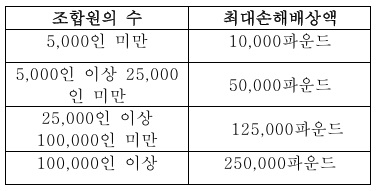
(2) 이 조가 적용되는 불법행위 소송에서 손해에 대한 노동조합 의 배상액은 다음의 한계를 초과 할 수 없다.

표1(원문)
표1(원문)

표1(번역문)
표1(번역문)

(3) 사무총장은 명령으로 명시 된 금액의 변경을 위해 제(2)항 을 수정할 수 있다. 그 명령은 사무총장이 적절하다고 생각하는 경과규정으로 할 수 있다.

(4) 해당 명령은 의회 각원의 의결을 통하여 취소할 수 있는 법률문서로 제정한다.

(5) 이 조에서 용어의 정의는 다음과 같다.

“의무위반”이란 어떠한 법령이나 법의 지배원리에 의해 부과되 는 의무의 위반을 말한다. “상해”란 개인의 신체적 또는 정 신적인 조건상의 모든 질병과 장애를 포함한다. “재산”이란 동산과 부동산(또는 스코틀랜드에서 상속가능한 또 는 이동가능한 것)을 포함한다.

특정재산에 대한 집행제한

제23조 특정재산에 대한 배상결정 의 집행제한

(1) 소송에서 다음 각 호에 대 해 손해, 비용 또는 경비의 전보 를 위하여 재정된 배상액은 보호 된 재산에 대한 집행에 의하여 보전될 수 없다.

(a) 노동조합 (b) 해당 자격으로, 노동조합의 신탁에 기탁된 재산의 수탁자 (그리고 그 일부에 대한 신탁 위반과 관련한 것을 제외) (c) 자신을 대표하는 노동조합의 조합원이나 임원과 노동조합원 전부

(2) 다음 각 호의 재산은 보호된 재산으로 한다.

(a) 해당 자격 외에 수탁자에게 속하는 재산 (b) 다른 조합원과 합작 또는 공동으로 하는 것 이외의 조합원에 속하는 재산 (c) 조합원이나 수탁자가 아닌 조합의 임원에게 속하는 재산 (d) 그 기금이 다음 각 목에 해당하는 경우, 조합의 정치기금 으로 이루어진 재산 (i) 그 기금을 이루고 있거나 이루고 있는 재산을 파업이나 쟁의행위에 대한 재정지 원을 위해 사용되는 것을 금하는 조합의 규약에 따르는 기금 (ii) 소송과 관련된 행위가 이 루어진 시점에서의 그 규약에 따르는 기금 (e) 상호부조금을 제공할 목적 으로 개별기금으로 이루어지고조합의 규약에 따라 유지되고있는 재산

(3) 이러한 목적을 위하여 “상호부조금” 은 다음 각 호를 포함한 다.

(a) 조합규약에 의해 명백히 인정된 다음 각 목의 어느 하나의 사람에 대한 지급 (i) 질병 또는 상해로 인한 무능력 중에 있거나 실직중에 있는 조합원 (ii) 연금을 받는 고령자인 조합원 (iii) 사고를 당하였거나 화재 또는 도난에 의해 자신의 도구를 잃어버린 조합원 (b) 해임수당 또는 조합원의 사망이나 그 부인의 사망에 대한 장례비용의 보조 또는 사망한 조합원의 자녀를 위한 급부

제3장 노동조합 행정

조합원의 이름 및 주소 명부

제24조 조합원의 이름 및 주소 명 부 유지의무

(1) 노동조합은 조합원의 이름 과 주소의 명부를 작성보관하며 그 명부에의 기록이 정확하고 최 신의 것이 되도록 하여야 한다.

(2) 명부는 컴퓨터로 작성될 수 있다.

(3) 노동조합은 다음 각 호를 한다.

(a) 합리적인 통지에 근거하여 명부에 자신에 관련한 기록이 있 는지 여부를 적절한 때에 무료로 확인하도록 조합원에게 허가 (b) 조합원에 의해 확인의 요청 이 있는 경우에, 가능한 신속하 게 그 조합원에 관련한 명부상의 등록의 사본을 그 조합원에게 무 료 또는 적절한 수수료를 받아서 제공한다.

(5) 이 조의 목적상 조합원의 주소란 그의 집주소 또는 서면으 로 우편상의 주소로 다루어 줄것을 조합측에 요구하였던 주소 를 말한다.

(6) 이 조의 요건을 갖추지 못 한 것을 이유로 하는 권리구제는 제25조(증명담당관에게) 또는 제26조(법원에)에 의한 신청의 방법으로 한다. 또한 제24B조에 따른 증명담당관의 공표 및 명령 집행 권한도 참조

제24ZA조 조합원감사증명서제공 의무

(1) 제24조에 따라 조합원의 이 름과 주소 명부를 보유해야 하는 노동조합은 증명담당관에게 각각 의 보고기간과 관련한 조합원감 사증명서를 제출해야 한다.

(2) 이 조와 제24ZB조부터 제 24ZF조까지에서, “보고기간”이란 제32조에따라 노동조합이 증명 담당관에게 연례보고서를 제출하 는 것과 관련한 기간을 말한다.

(3) 조합은 보고기간과 관련하여 제32조에 따른 연례보고서를 증명담당관에게 제출함과 동시에 보고기간과 관련한 조합원감사증 명서도 담당관에게 제출해야 한 다.

(4) 제24ZB조에 의해 보고기간 과 관련하여 보증인을 임명해야 하는 노동조합의 경우, 해당 기 간과 관련하여 “조합원감사증명 서”는 보증인이 해당 임명에 따 라 그 기간과 관련하여 해당 조 합에 제공해야하는 증명서이다.

(5) 그 밖의 경우, 보고기간과 관련한 “조합원감사증명서”는 다 음 각 호를 포함한 증명서를 말 한다.

(a) 그 대표로 서명할 권한을 위 임받은 노동조합 임원의 서명 (b) 임원의 성명 (c) 임원의 최선의 지식과 믿음 에서, 해당 조합이 보고기간동안 제24조제(1)항에 따른 의무를 준수하였는지의 여부에 대한 기 술

(6) 노동조합은, 개인의 요청이 있을 때, 그 사람에게 가장 최신 의 조합원감사증명서 사본을 무 료로 또는 적절한 수수료를 받고 제공해야 한다.

(7) 증명담당관은 적절한 시간 에 대중이 무료로 또는 적절한 수수료를 지급하고 이 조에따라 임원에게 제출된 모든 조합원감 사증명서의 사본을 열람할 수 있 도록 해야한다.

제24ZB조 보증인 임명의무

(1) 제24조에 의하여 조합원의 이름 및 주소 명부를 유지하여야 하는 노동조합은 각 관련 보고기 간에 독립된 유자격자를 해당기 간의 보증인으로 임명하여야 한 다.

(2) 보증인 임명시 보증인은 노 동조합에 다음 각 호를 맹세할 의무가 포함된다.

(a) 제24ZD조의 요건에 부합하 는 보고기간과 관련하여 조합에 조합원감사증명서를 제출 (b) 보증인이 그 증명서 제공을 가능하게 하기위하여 필요하다 고 생각하는 해당 조사 수행

(3) 다음 각 호의 경우라면 “독 립된 유자격자”라고 한다.

(a) 장관이 이 조의 목적을 위하 여 명령으로 특정할 수 있는 조건을 충족하는 사람 또는 해 당 명령에 이름이 특정된 사람 (b) 노동조합이 다음 각 목의 어느 하나를 믿을 만한 사유가 없는 경우 (i) 보증인의 임무를 유능하 게 수행할 것 같지 않음 (ii) 조합과 관련한 그 사람의 독립성에 합리적으로 문제 가 제기될 수 있음

(4) 다음 각 호의 누구도 보증 인으로서 행위할 수 없다.

(a) 노동조합 또는 노동조합의 지부나 부서의 임원이나 근로 자 (b) 해당 임원이나 근로자의 파 트너 또는 고용관계에 있거나 이들을 고용한 사람.

(5) 이전 보고기간 종료일에 조 합원의 수가 10,000명을 초과하 지 않는다면, 이 조는 보고기간 과 관련한 노동조합에 적용되지 않는다.

(6) 이 조에 따른 명령은 법률 문서로 작성되며 각 의원의 결의 로 무효가 될 수 있다.

제24ZC조 보증인의 임명과 해임

(1) 제24ZB조가 적용되는 노동 조합의 규약은 보증인의 임명과 해임에 대한 규정을 포함해야 한 다.

다만, 다음의 규정은 규약의 내용에도 불구하고 효력을 갖는다.

(2) 조합의 조합원 또는 그 조 합원 대표들의 총회에서 통과된 결의에 의하지 않고서는 보증인 이 직에서 해임되어서는 안 된다.

(3) 보고기간과 관련하여 보증 인으로 적법하게 임명된 사람은 다음 각 호의 어느 하나의 경우 가 아니라면, 보고기간에 보증인 으로 재신임되어야 한다.

(a) 노동조합의 총회에서 다른 사람을 지명하기로 또는 그 사 람이 재신임되지 않음을 명시 적으로 규정하는 결의가 통과 된 경우 (b) 해당 사람이 자신의 재신임 을 원하지 않음을 서면으로 노 동조합에 통지한 경우 (c) 제24ZB조에 따른 임명자격 을 갖추지 못한 사람 (d) 무능력을 이유로 보증인으 로서의 행위가 중단된 사람

(4) 단, 다음 각 호의 경우 자동 으로 재신임되지 않아도 된다.

(a) 은퇴자 (b) 다른 사람을 대체로 지명할 것에 대한 잠정 결의안이 통지 된 경우 (c) 예정된 대체인의 사망이나 무능력을 이유로 그 결의안이 회의에서 진행될 수 없는 경우

제24ZD조 보증인의 조합원감사증 명서 요건

(1) 제24ZB제(2)항제(a)호 목 적상 보증인이 제출한 보고기간 과 관련한 조합원감사증명서의 요건은 다음 각 호와 같다.

(2) 증명서에는 보증인의 이름 과 서명이 있어야 한다.

(3) 증명서에는 다음 각 호가 있어야 한다.

(a) 보증인의 견해에서, 해당 조 합원의 이름 및 주소 명부의 편집 및 유지를 위한 노동조합 의 시스템이 보고기간동안 제 24조제(1)항에 따른 조합의 의 무를 준수하는 목적을 충족하 는 지의 여부 (b) 보증인의 견해에서, 보증인 이 자신의 임무를 수행하기위 하여 필요하다고 여기는 정보 와 설명을 받았는지의 여부

(4) 증명서가 다음 각 호의 어 느 하나를 기술하고 있다면, 증 명서는 보증인이 해당 취지의 진 술을 한 이유를 적시해야한다.

(a) 보증인의 견해에서, 해당 조 합원의 이름 및 주소 명부의 편집 및 유지를 위한 노동조합 의 시스템이 보고기간동안 제 24조제(1)항에 따른 조합의 의 무를 준수하는 목적을 충족하 지 못함 (b) 보증인의 견해에서, 보증인 이 자신의 임무를 수행하기위 하여 필요하다고 여기는 정보 와 설명을 받지 못함

(5) 제(4)항제(b)호에 명시된 정보나 설명을 받지 못하는 경 우, 증명서에는 또한 다음 각 호 가 기술되어야 한다.

(a) 요청하였으나 얻지 못한 정 보나 설명에 대한 진술 (b) 제24ZE조에 따라 보증인이 노조의 임원 또는 노조 지부나 부서의 임원에게 그러한 정보 나 설명을 요청하였는지의 여 부

(6) 보증인의 서명에 관한 제 (2)항의 내용은, 그 사무실이 법 인 또는 동업으로 소유되는 경 우, 법인 또는 동업자의 이름으 로 대신하여 서명할 권한이 있는 개인이 법인이나 동업자의 이름 으로 하는 서명을 말한다.

제24ZE조 보증인의 권리

(1) 제24ZB조에 따라 노동조합의 임명을 받은 보증인은 다음 각 호의 권리가 있다.

(a) 적절한 시간에 노동조합원의 이름 및 주소의 명부와 보증인이 조합이 제24조제(1)항의 요 건을 준수하는 지의 여부와 관 련이 있으리라고 여기는 모든기타 문서에 대한 접근권 (b) 조합의 임원 또는 조합의 지사나 부서의 임원에게 보증인이 자신의 임무를 수행하기 위하여 필요하다고 여기는 정보나 설명을 요구할 권리

(2) 제(1)항에 언급된 문서는 모든 형식으로 기록된 정보를 포 함한다.

제24ZF조 증명담당관에게 정보를 제공할 의무

보증인이 보고기간과 관련하여 보증인의 견해에서, 다음 각 호 의 어느 하나가 기술된 조합원감 사증명서를 노동조합에 제공한다 면, 보증인은 증명서가 조합에 제출된 후 가능한 신속하게 증명 서사본을 증명담당관에게 보내야 한다.

(a) 해당 조합원의 이름 및 주소 명부의 편집 및 유지를 위한 노동조합의 시스템이 보고기간 동안 제24조제(1)항에 따른 조 합의 의무를 준수하는 목적을 충족하지 못한 경우, (b) 보증인이 자신의 임무를 수 행하기위하여 필요하다고 여기 는 정보와 설명을 받지 못한 경우,

제24ZG조 비밀유지의무

(1) 명부에 대한 기밀유지의무 는 제24ZB조에 따른 노동조합의 보증인 임명 시 포함된다.

(2) 명부에 대한 기밀유지의무 는 보증인이 조합에 다음 각 호 를 맹세하는 의무이다.

(a) 허가받은 경우를 제외하고, 조합원 명부의 어떠한 이름이 나 주소를, 공개하지 않음 (b) 허가받은 경우를 제외하고, 다른 사람에 의하여 어떠한 이 름이나 주소의 공개가 없다는 것을 보장하기위한 모든 합리 적인 조치를 취함

(3) 조합원의 이름이나 주소의 공개가 허가되는 상황이란, 다음 각 호의 어느 하나를 말한다.

(a) 조합원이 동의하는 경우 (b) 증명담당관이 임원의 직무 해제를 목적으로 요청하거나 필요로 하는 경우 (c) 임원이 임명한 조사관의 직무해제를 위하여 요청되는 경우 (d) 보증인의 직무 해제를 위하 여 요청되는 경우 (e) 범죄 또는 형사소송의 수사 를 위하여 요청되는 경우

제24ZH조 서류작성요청 등 증명 담당관의 권한

(1) 증명담당관이 그렇게 해야 할 합당한 이유가 있다고 생각한 다면, 담당관은 다음 각 호를 할 수 있다.

(a) 지시에 명시된 관련문서 제 출을 요구할 것을 노동조합 또 는 노동조합의 지사나 부서에 지시 (b) 그 권한에 대한 증거를 제 출할 때(필요한 경우), 노동조 합, 지부 또는 노동조합의 부서 에 권한을 받은 사람에게 그가 명시한 관련문서를 즉시 제출 할 것을 요청할 수 있는 권한 을 담당관 직원 또는 다른 사 람(“담당자”)에게 위임

(2) 노동조합 또는 지부 또는 노동조합의 부서와 관련하여 “관 련 문서”란 다음 각 호를 말한 다.

(a) 노동조합원의 이름 및 주소 명부 (b) 증명담당관 또는 담당자가 조합이 제24조제(1)항(조합원 등록에 관한 의무)의 요건을 준수하지 않았는 지의 여부와 관련있다고 여기는 기타 설명 문서

(3) 제(1)항제(a)호에 따른 지 시는 문서가 제출될 시간과 장소 를 명시해야한다.

(4) 증명담당관 또는 담당자가 제(1)항에 의하여 문서의 제출 을 요청할 권한이 있는 경우, 증 명담당관 또는 담당자는 그 문서 를 소유한 담당관 또는 담당자라 고 여겨지는 사람에게 그 문서 제출을 요청할 동일한 권한을 갖 는다.

(5) 문서의 제출을 요청할 이 조에 따른 권한은 다음 각 호의 권한을 포함한다.

(a) 다음 각 목을 목적으로 문서 가 제출되는 경우, (i) 해당 문서의 복사 또는 발췌 (ii) 그 문서에 대한 설명을 위하여 문서를 제출할 것을 요청 (iii) 노동조합의 임원 또는 대리인에게 그 중 어느 하 나에 대하여 설명을 제공할 것을 요청 (b) 문서가 제출되지 않은 경우, 문서를 제출해야 하는 사람에 게 본인이 아는 한에서 문서가 있는 곳을 진술할 것을 요청

(6) 제(5)항제(a)호(iii)목의 목 적상, “대리인”은 제24AB조에 따 라 노동조합이 지정한 보증인을 포함한다.

(7) 보충규정은 제24ZK조 참조.